Author: Robert Camilleri

  • Schrödinger’s Data Backups: Why Untested Resilience Is a Governance Failure

    Schrödinger’s Data Backups: Why Untested Resilience Is a Governance Failure

    In the realm of quantum physics, Schrödinger’s Cat is a famous thought experiment: a cat is placed in a sealed box with a radioactive source and a poison that will be triggered if an atom decays. Until the box is opened and the cat is observed, it exists in a superposition of states; both alive and dead at the same time.

    In the modern enterprise, data backups exist in a disturbingly similar state.

    On the surface, everything looks perfect. The dashboard shows a sea of green checkmarks. The policy manual is impressive. The Disaster Recovery (DR) plan has been signed off by the auditors. According to every reporting metric available to the Board, the organisation is protected. Yet, until a full-scale restoration is attempted under pressure, the integrity of those backups is unknowable. They are simultaneously “working” and “broken” until the moment of observation.

    The uncomfortable truth for leadership is this:

    A backup you haven’t restored is optimism, not strategy.


    The Illusion of Resilience

    Many organisations mistake “having backups” for “being resilient.” This is a fundamental category error. Resilience is not a static state achieved by purchasing a software license; it is a dynamic capability that must be proven.

    The IT industry has become exceptionally good at providing “false signals” of safety. These signals create a dangerous sense of complacency among C-suite executives and Board members:

    • The Green Checkmark Syndrome: Backup dashboards provide a daily sense of achievement. “Job completed successfully” simply means the data was copied from point A to point B. It does not mean point B is readable, consistent, or useful.
    • Offsite Replication Status: Knowing that data is stored in a secondary cloud region or a remote data center is comforting, but replication often replicates corruption just as efficiently as it replicates healthy data.
    • The “Paper” DR Plan: An annual DR plan document approved by an audit is a statement of intent, not a proof of capability.

    None of these metrics validate what actually matters during a crisis: Recovery Time Objectives (RTO), Data Consistency, and Application Functionality. Technical recovery is not a success if the servers are “on” but the applications cannot talk to the database, or if the identity management system is inaccessible, preventing anyone from logging in to the restored environment.


    Why This Is a Governance Issue (Not an IT Issue)

    For too long, backup and recovery have been relegated to the “basement” of IT operations; a checkbox for system administrators to manage. This is a profound misunderstanding of risk. Untested backups represent a systemic governance failure for three primary reasons:

    1. The Creation of Known-But-Unvalidated Safeguards

    Governance is about the oversight of safeguards. If a Board is told a safeguard exists but that safeguard has never been tested, the Board is making decisions based on unverified assumptions. This is the equivalent of a shipping company assuming its lifeboats will float because they were purchased recently, without ever putting them in the water.

    2. False Assurance at the Executive Level

    When IT reports “100% backup success” to the Risk Committee, they are providing a metric that masks the actual risk. This produces a “veneer of safety” that prevents the Board from allocating necessary resources to true resilience.

    3. The Transfer of Operational Risk into Strategic Blind Spots

    In the event of a total systemic failure, such as a sophisticated ransomware attack, the inability to restore data moves from being an “IT problem” to a “going concern” issue. It threatens the very existence of the company.

    The Regulatory Context: Beyond Best Practice

    This is no longer just a matter of “good hygiene”; it is a matter of law. Under frameworks like NIS2, resilience and incident response are becoming mandatory pillars of corporate governance.

    These regulations emphasise accountability at the management level. If an organisation suffers a catastrophic data loss because its backups were never tested, the Board cannot claim they “didn’t know.” Compliance now requires demonstrable capability, not just documented intention. A DR plan sitting in a PDF on a corrupted server does not meet your resilience obligations.


    The Hidden Failure Modes Boards Rarely See

    In a boardroom, “Backup” sounds like a single, simple thing. In reality, it is a complex chain of dependencies. When that chain breaks, it usually happens in ways that catch unprepared executives off guard. Here are the “failure modes” that rarely make it into a status report:

    • Encryption Key Paradox: In a crisis, you find your backups are encrypted (to protect them from hackers), but the keys required to unlock them were stored on the very system that just crashed.
    • SaaS Data: Many Boards assume that because the company uses Microsoft 365 “the cloud” handles the backups. Most SaaS providers operate on a “shared responsibility” model … they protect the infrastructure, but you are responsible for the data. If a user deletes a critical folder, it may be gone forever.
    • The Identity Deadlock: You have the data backups, but the system that authenticates users (Identity Provider) is down. Without the “keys to the front door,” you cannot access the restored data.
    • Logical Corruption: A virus or a database error may have been silently corrupting data for months. Your backups are “successful,” but they have been faithfully backing up the corruption for weeks, leaving you with no clean version to return to.

    In the words of Nassim Taleb, this is Fragility. The system appears stable because it hasn’t been hit yet. But because it has never been stressed, the failure, when it comes, will be non-linear and catastrophic.


    Optimisation vs. Redundancy: The Efficiency Trap

    Modern IT is driven by the mandate to be “Lean.” We optimise for cost efficiency, performance, and minimal waste. We remove “unnecessary” overhead.

    However, resilience requires a controlled form of inefficiency. True resilience requires “slack”; extra time for staff to run drills, extra storage space for multiple versions of data, and redundant systems that sit idle until needed. When an organisation over-optimises for cost, resilience is usually the first thing sacrificed at the altar of the budget.

    This is made worse by “Firefighting IT Culture.” Most IT teams are so overwhelmed by day-to-day tickets and reactive maintenance that they never have the “luxury” to run a full-scale restoration excersie. Restore drills are postponed indefinitely. As a result, technical gap accumulates quietly in the dark. Confidence in the system increases simply because it hasn’t failed yet, while the actual probability of a successful recovery decreases every day.


    The Organisational Blind Spot

    Why is restore testing so rare?

    1. No Immediate ROI: You don’t make money by testing a restore. It is a cost center.
    2. No Visible Crisis: Until the building is on fire, no one cares about the fire extinguishers.
    3. Fear of Exposing Weakness: IT leadership may be hesitant to run a test because they suspect it might fail, and a failed test requires explaining to the Board why “their” systems aren’t working.

    This leads to the Illusion of Resilience: the act of going through the motions of security and backup compliance to satisfy auditors, without ever actually possessing the ability to recover from a real strike.


    The Fix: What Mature Governance Looks Like

    To move from “Hope” to “Strategy,” Boards and C-suite executives must change the way they measure and manage data resilience. It requires moving beyond the dashboard and into the realm of verification.

    1. Regular Restore Drills

    Do not ask IT if the backups “ran.” Ask when the last full-scale restoration of a critical business service was completed.

    2. Documented RTO/RPO Validation

    If the business claims it can be back online in 4 hours (Recovery Time Objective), that number must be tested. If the test reveals it actually takes 18 hours, the Board needs to know that gap exists now, not during a ransomware negotiation.

    3. Application-Level Recovery Testing

    Testing a server restore is easy. Testing an application restore (where the database, the web front-end, the API layer, and the user permissions all have to sync up) is hard. This is the only level of testing that matters to the end-user.

    4. Board-Level Reporting that Makes Sense

    Board reports should no longer feature “Backup Success %.” Instead, they should include:

    • Date of the last successful full-environment restore test.
    • Actual recovery time achieved vs. target.
    • Identified gaps and the specific budget allocated to remediate them.

    5. Treat Restore Testing Like a Fire Drill

    Fire drills are inconvenient. They disrupt the workday. They are loud. But we do them so that when the alarm is real, people don’t die. Data recovery testing must be treated the same.


    Resilience Is Demonstrated, Not Declared

    Any disaster recovery plan is a work of fiction until it is rehearsed.

    The Board of Directors is not responsible for preventing every possible cyberattack or system failure; in the modern world, that is an impossible standard. However, the Board is responsible for ensuring that when a crisis arrives, the organisation has the demonstrated capability to survive it.

    The time to find out that your backups don’t work is on a Tuesday morning during a scheduled drill, not at 3:00 AM on a Sunday during a ransomware attack.

    Resilience is not a status update. It is a muscle that needs to be exercised. If you don’t, it will fail you when you need it most.

  • Robert’s Radar #6

    Robert’s Radar #6

    Welcome to Robert’s Radar; a semi-regular snapshot of what’s bouncing around in my head lately. Ideas, questions, , and quotes that stuck with me. Essays, art, music, tech, and books that are too interesting to leave buried in my notes.

    No theme, no fluff. Just the things worth pausing for.

    If you’re curious, thoughtful, or just mentally scrolling… this one’s for you.


    A Wave 39 Years in The Making

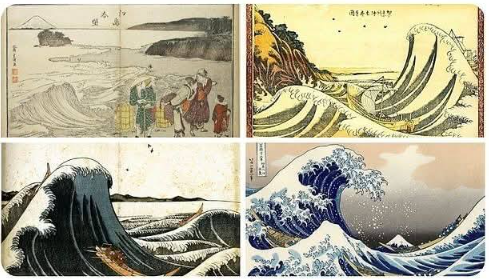

    The famous print did not appear out of nowhere. Hokusai drew and redrew waves for almost four decades. Earlier works show restless, slightly awkward seas. Over time the foam, the focus, the colours, the curve, the tension between wave and boat all slowly sharpened. What we now recognise as The Great Wave off Kanagawa is less a moment of genius and more the visible tip of 39 years of refinement.

    When he was 33 (1792)

    “Springtime in Enoshima,” 1797 (Photo: Wikimedia Commons Public Domain)

    The sea is almost decorative here. Beautiful, but still in the background. The wave is there, but it isn’t the main character

    When he was 44 (1803)

    “View of Honmoku off Kanagawa,” 1803 (Photo: Wikimedia Commons Public Domain)

    The water has more movement. The scale and energy are building. You can feel Hokusai getting interested in the drama of the wave itself.

    When he was 46 (1805)

    “Fast Cargo Boat Battling The Waves,” 1805 (Photo: Wikimedia Commons Public Domain)

    Now the wave is a threat. Boats are dwarfed. The foam starts to take on that claw-like shape we recognise, but it is still rough.

    When he was 72 (1831)

    “The Great Wave off Kanagawa,” ca. 1826-1833 (Photo: Wikimedia Commons Public Domain)

    Here is the wave that everyone recognises. The curve is perfect, the foam is alive, the balance between month Fuji in the distance and the boats in the foreground is precise and deliberate. Same subject, completely different level.

    I find this comforting. It is easy to compare our work to someone else’s masterpiece and forget that their “finished piece” is standing on an invisible stack of sketches, drafts, abandoned ideas and second attempts.

    The lesson I’m taking from Hokusai is simple:

    Do the work that is in front of you today, knowing that it might be one more draft on the way to your own “Great Wave”.

    Mastery is less about dramatic breakthroughs and more about giving yourself enough repetitions to learn and grow. Hokusai’s wave isn’t one good day in the studio. It’s the accumulated force of decades.


    Stoicism in a Nutshell

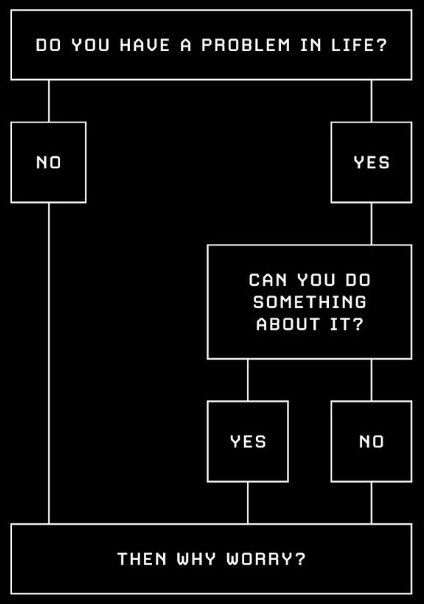
    I recently came across the following diagram. It is almost cartoonishly simple, but it maps straight onto the Stoic idea of control.

    In Stoicism, every life situation can be categorised into two buckets:

    • What I can control (my actions, choices, effort, attention, character)
    • What I cannot control (other people’s reactions, outcomes, the past, luck)

    He suffers more than necessary, who suffers before it is necessary” — Seneca

    If you can change something, act.

    If you cannot change it, accept it.

    Understand that wasting energy trying to control the uncontrollable causes distress and anxiety. It does not mean pretending everything is fine. It means putting your emotional weight behind what is up to you and loosening your grip on what is not. It means shifting focus from past regrets or future anxieties to the current moment, where actions can be taken.

    I like this flowchart as a tiny mental script: a 3-step Stoic debugger for everyday life.


    The Four Layers of Information Reality

    The Four Layers of Information Reality by Hana Lee Goldin, MLIS

    A framework for understanding how information becomes belief.

    Read on Substack

    If you are analytical, well-read, and data-driven, it is easy to assume you are harder to fool.

    This piece is a good reminder that every “fact” we encounter has a history:

    • Data can be clean but it can also be selectively collected.
    • Information processing can look neutral, but it is always optimised for something.
    • Narratives can feel balanced, but they always leave things out.

    By the time something becomes a belief, the groundwork has already been laid.

    Next time you encounter a strong claim, instead of jumping straight to “Is this true?”, question the deeper layers first.

    • How was the data gathered?
    • Who processed it, and to what end?
    • What incentives shaped what was highlighted or ignored?
    • What was left out of the story?

    Understand how information is transformed before it reaches you.

    This is not about becoming cynical. Total scepticism leads to paralysis. Total credulity leads to manipulation. The middle ground is structural awareness: knowing that every layer (data -> processing -> narrative -> belief) leaves fingerprints, and learning to look for them.


    The Commodity of Cognition: Why AI is Redefining “Smart”

    The Commodity of Cognition: Why AI is Redefining “Smart” by Anastasia | ModernMomPlaybook

    How AI is redefining “smart” and what it means for raising our kids

    Read on Substack

    If machines can calculate faster, code more efficiently, and retrieve information instantly, then technical cognition shifts from differentiator to baseline. The skill does not disappear, it just stops being rare.

    So if AI handles the computation, what remains uniquely human?
    The danger is not that AI replaces smart people. It is that we keep measuring “smart” with outdated metrics. If you optimise your life solely around test scores, technical credentials, and linear expertise, you might be preparing for a world that no longer exists.

    The smartest person in 2035 may not be the fastest problem-solver.
    They may be the person who:

    • knows which problem is worth solving
    • knows when not to optimise
    • can anticipate second-order effects
    • can tolerate ambiguity
    • can judge ethically

    As an IT professional and the parent of a six-month-old daughter, I am very aware of how deeply AI is beginning to shape society. I often find myself thinking about what this will mean for her as she grows up in an increasingly AI-driven world.

    It is also clear to me that parenting will need to evolve alongside these changes. Just as our parents had to help us navigate the shift into the computer age, we now have a responsibility to equip our children with the mindset and skills they will need to understand, adapt to, and thrive in this new environment: choosing the right problems, thinking beyond the first consequence, and staying human in the middle of all the optimisation.


  • Robert’s Radar #5

    Robert’s Radar #5

    Welcome to Robert’s Radar; a semi-regular snapshot of what’s bouncing around in my head lately. Ideas, questions, , and quotes that stuck with me. Essays, art, music, tech, and books that are too interesting to leave buried in my notes.

    No theme, no fluff. Just the things worth pausing for.

    If you’re curious, thoughtful, or just mentally scrolling… this one’s for you.


    Substack pieces that stuck with me

    “Make Something Heavy”

    Make Something Heavy. by Anu

    We’re creating more than ever, but it weighs nothing.

    Read on Substack

    This essay discribes how light and weightless most of what we create online has become. The idea is simple:

    We are creating more than ever, but most of it weighs nothing. Tweets, reels, posts, hot takes. They flare up and vanish.

    “Make Something Heavy” is a reminder to aim for things with weight such as long-form work, craft, depth, and projects that actually change how we think or live.

    It made me ask: What am I building that could still matter in five years?

    “Unrot Your Brain”

    unrot your brain by Kylee

    on post-grad decay and the fight to feel sharp again

    Read on Substack

    If “Make Something Heavy” is about what we create, “Unrot Your Brain” is about what we consume.

    It’s a short, practical call to wake you brain back up from the constant drip of short-form, hyper-optimised content. The suggestions are simple: reclaim your attention, add small bits of friction back into your day, and choose inputs that stretch you rather than numb you.


    Youtube video that made me think

    What Orwell Personally Believed – Ryan Chapman

    George Orwell’s political evolution (from Spanish Civil War betrayals to anti-totalitarian warnings in 1984 and Animal Farm) eerily mirrors 2026’s geopolitical chaos: Russia-Ukraine stalemate, Israel-Palestine conflict, Maduro’s ouster from power, Europe’s weakening global standing, Trump’s “fake news” rhetoric and Greenland annexation talk… all fueled by polarised media and truth erosion.


    Famous artwork I’m studying

    The School or Athens – Raphael

    I’ve been spending time with Raphael’s School of Athens, one of the great paintings of the Renaissance.

    At the center you’ve got Plato and Aristotle walking side by side: Plato points upward, towards abstract ideals such as truth, beauty, justice, and wisdom. Beside him, Aristotle gestures horizontally, towards the empirical world, science, observation, experience, and practical reality.

    Two different approaches, but both reaching for the same ideal: the truth of existance.

    They’re surrounded by a crowd of thinkers, around 52 iconic fugures, including Euclid, Socrates, Diogenes, Heraclitus, Pythagoras, and others.

    Even the sculptures echo the theme: Athena (Minerva) on one side, representing wisdom and strategic war, and Apollo on the other, representing light, music and harmony.

    It’s the kind of work you can keep revisiting, and every time, another detail quietly steps forward.


    Piano piece I’m practising

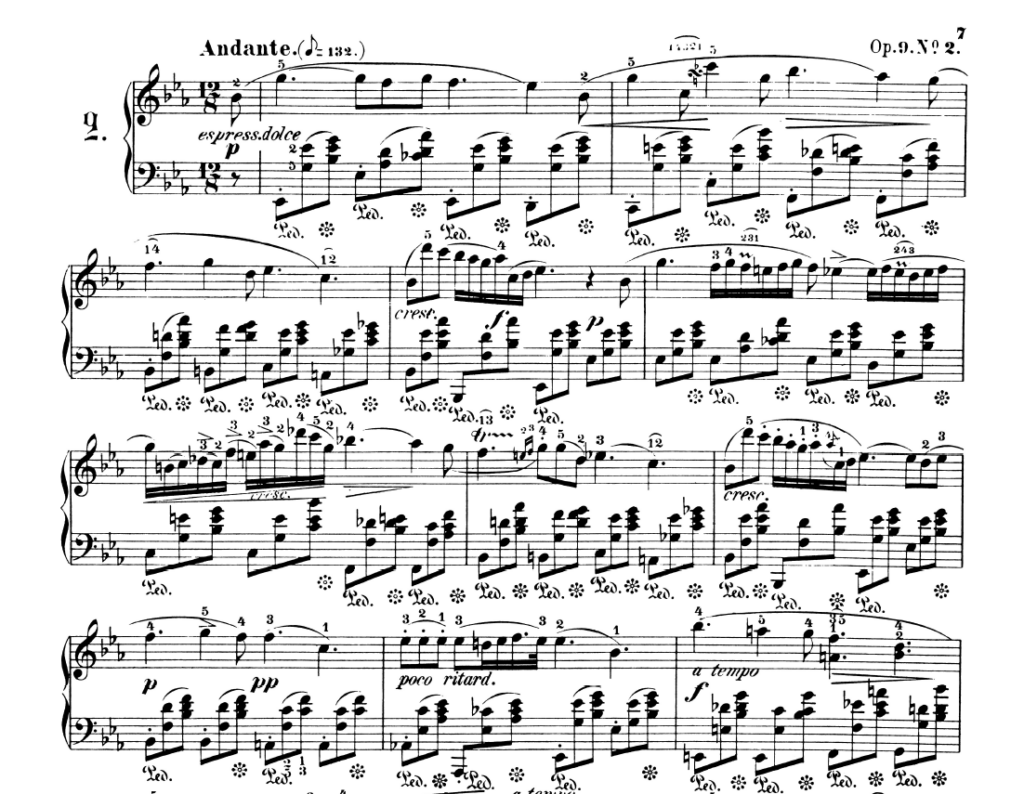
    Frédéric Chopin – Nocturne No. 2 in E-flat Major, Op. 9 No. 2

    Probably one of Chopin’s most famous pieces, and for good reason.

    Written when he was around 20, this Nocturne has a bel canto-style melody. It lives in that dreamy, slightly melancholic space Chopin does so well.

    It’s written in a kind of expanded binary form (AABABA + coda), a conversation that keeps returning to the same thought, but with slightly different emotional colours each time.

    This intermediate-to-advanced piece demands advanced expressive control and musicality, delicate ornamentation which increases in each repetition, and precise left-hand leaps to support the melody in the right.


    Book I’m reading

    The Sword and the Scimitar

    by David W. Ball

  • 2025 Reading Journal

    2025 Reading Journal

    2025 was a year of dark corridors, difficult histories, and a search for steadier ways of thinking.

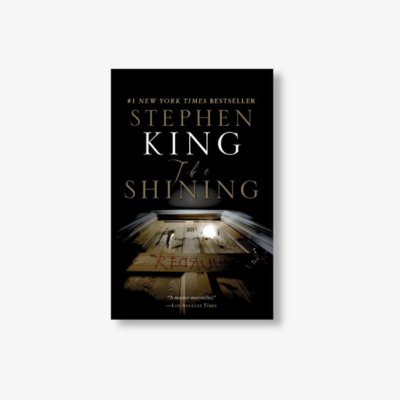
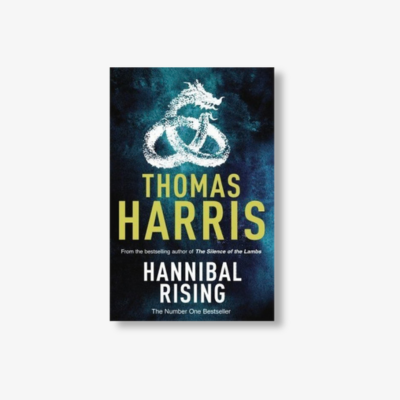
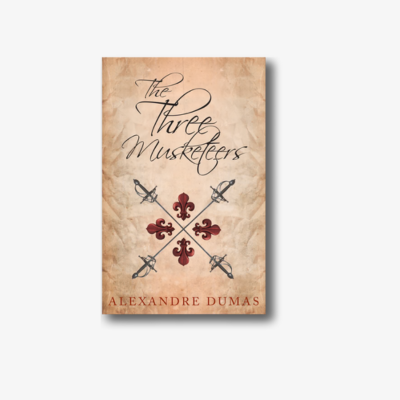
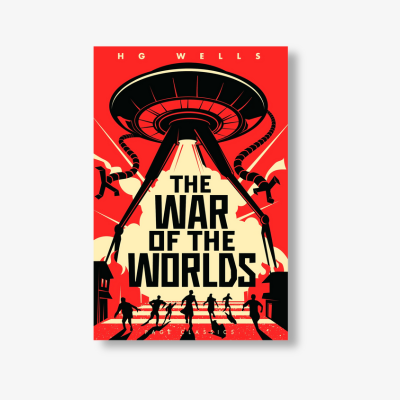
    On the fiction side, I delved into the mind of Hannibal Lecter through “Red Dragon”, “The Silence of the Lambs“, “Hannibal”, and “Hannibal Rising” … equal parts disturbing and fascinating. Alongside them came other kinds of dread: the psychological unease of “The Shining”, the grey, suffocating control of “Nineteen Eighty-Four”, the alien invasion and panic of “The War of the Worlds”, and the uneasy, blurry humanity of “Do Androids Dream of Electric Sheep?”. “The Three Musketeers” added its own flavour of tension, loyalty, and intrigue to the mix, while “The Iliad” pulled me much further back in time, into a world of gods, pride, fate, and glory.

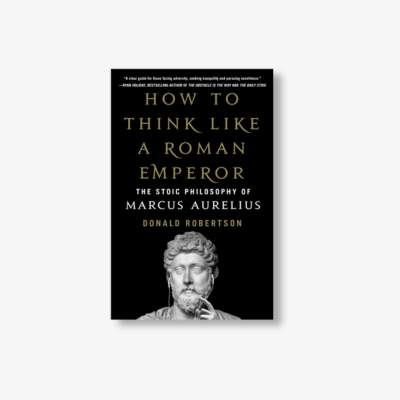
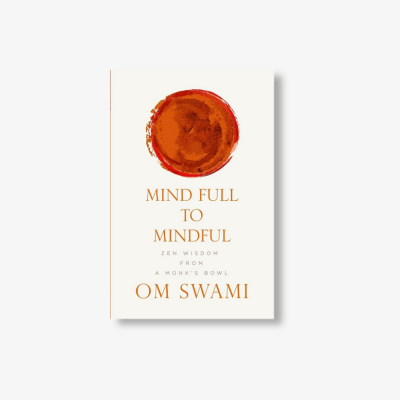
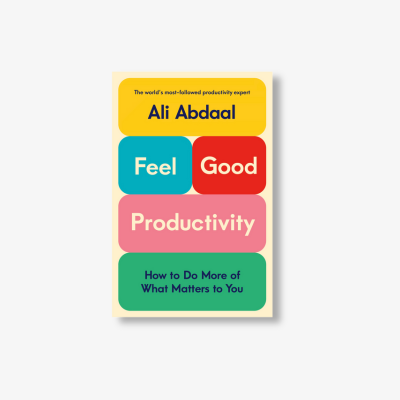
    To balance all that, there was a strong current of reflection and practical philosophy. “The Tattooist of Auschwitz” was one of the most moving books of the year, pairing horror with resilience. “How to Think Like a Roman Emperor”, “The Richest Man in Babylon”, “Mind Full to Mindful“, and “Feel-Good Productivity” all, in very different ways, wrestled with how to live better: with clearer principles, smarter habits, and a more deliberate sense of meaning.

    Below is the full list of what I read in 2025, with a simple rating for how much each book stayed with me.

    Hannibal

    – Thomas Harris –

    ⭐⭐⭐⭐⭐

    The Silence Of The Lambs

    – Thomas Harris –

    ⭐⭐⭐⭐⭐

    The Tattooist of Auschwitz

    – Heather Morris –

    ⭐⭐⭐⭐⭐

    How To Think Like A Roman Emperor

    – Donal J. Robertson –

    ⭐⭐⭐⭐

    The Richest Man In Babylon

    – George S. Clason –

    ⭐⭐⭐⭐

    The Shining

    – Stephen King –

    ⭐⭐⭐⭐

    Nineteen Eighty-Four

    – George Orwell –

    ⭐⭐⭐⭐

    Iliad

    – Homer –

    ⭐⭐⭐⭐

    Hannibal Rising

    – Thomas Harris –

    ⭐⭐⭐

    The Three Musketeers

    – Alexandre Dumas –

    ⭐⭐⭐

    Do Androids Dream Of Electric Sheep

    – Philip K. Dick –

    ⭐⭐⭐

    The War Of The Worlds

    – H. G. Wells –

    ⭐⭐⭐

    Red Dragon

    – Thomas Harris –

    ⭐⭐⭐

    Mind Full to Mindful

    – Om Swami –

    ⭐⭐⭐

    Feel Good Productivity

    – Ali Abdaal –

    ⭐⭐

  • 2024 Reading Journal

    2024 Reading Journal

    2024 was a year of heavy themes and strange worlds: war, injustice, absurd bureaucracy, hell, alien physics, and how to stay sane through it all.

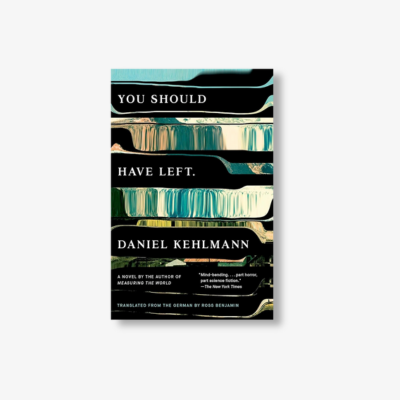
    The Pianist“, a quiet, devastating memoir that set the tone for a lot of what followed: questions of survival, dignity, and what remains of a person when everything else is stripped away. From there, “The Trial”, “A Short Stay in Hell“, and “The Gods Themselves” pushed in different directions but circled similar territory of systems we don’t control, rules we don’t understand, and universes that don’t particularly care whether we “get it” or not.

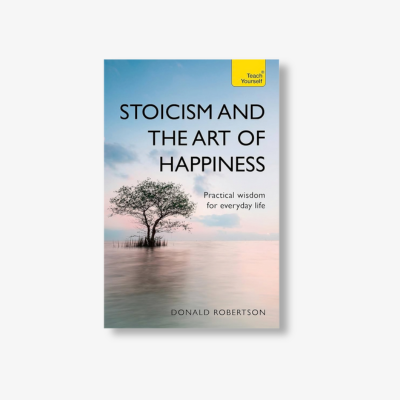
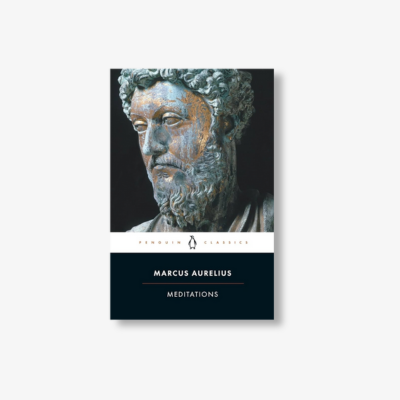
    Threaded through all of this was a Stoic undercurrent: “Letters from a Stoic“, “Meditations“, “Stoicism and the Art of Happiness” offered tools, context, and historical colour for thinking about resilience, virtue, and how to live well in a world that often doesn’t make sense. Even “12 Rules for Life“, which I rated lower than the rest, still joined the pile of books trying to answer a basic question: how do you carry yourself through chaos?

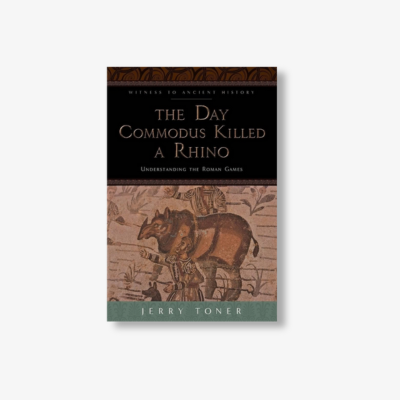
    The Day Commodus Killed a Rhino” provided an entertaining look at everyday life, power, and spectacle in ancient Rome, using one outrageous emperor and his arena antics to show how the whole system really worked.

    Below is the full list of what I read in 2024, with a simple rating for how much each book stayed with me.

    The Pianist

    – Wladyslaw Szpilman –

    ⭐⭐⭐⭐⭐

    The Trial

    – Franz Kafka –

    ⭐⭐⭐⭐

    Stoicism And The Art Of Happiness

    – Donald Robertson –

    ⭐⭐⭐⭐

    The Gods Themselves

    – Isaac Asimov –

    ⭐⭐⭐⭐

    You Should Have Left

    – Daniel Kehlmann –

    ⭐⭐⭐⭐

    Letters From A Stoic

    – Seneca –

    ⭐⭐⭐⭐

    A Short Stay in Hell

    – Steven L. Peck –

    ⭐⭐⭐⭐

    Meditations

    – Marcus Aurelius –

    ⭐⭐⭐⭐

    The Day Commodus Killed a Rhino

    – Jerry Toner –

    ⭐⭐⭐

    12 Rules For Life

    – Jordan B. Peterson –

    ⭐⭐

  • Stop Building Pedestals: Why Focusing on Monkeys Drives Real Progress

    Stop Building Pedestals: Why Focusing on Monkeys Drives Real Progress

    Last week, I listened to Simon Sinek’s podcast episode featuring Dr. Astro Teller, Google’s Innovation Chief and founder of X, Google’s Moonshot Factory. Dr. Teller referenced the “Monkey on a Pedestal” analogy, which serves as a guiding principle at the Moonshot Factory.

    The concept goes like this:

    Imagine you are tasked with teaching a monkey to recite Shakespeare while standing on a pedestal. The typical response to this difficult problem would be to break it down into smaller, more manageable tasks.

    In this case, you have two major tasks: (1) teach the monkey and (2) build the pedestal.

    It’s clear that teaching the monkey is the more difficult task while building the pedestal is the easier one. Following conventional wisdom, you might think tackling the easier task first makes sense, building the pedestal to gain momentum and mark off some quick wins.

    After all, both tasks demand time, money, and attention.

    Task Completion Bias

    Starting with the easy tasks may seem like a smart way to build momentum. You can check them off your list and feel a sense of accomplishment.

    However, Teller’s analogy cautions against this approach because it encourages procrastination by focusing on non-critical tasks — what psychologists call task completion bias. This bias pushes us toward completing easy, trivial tasks because it gives us the illusion of progress. It’s far more satisfying to tick off several small tasks than to face the reality of working on a complex issue that will take time to resolve.

    I frequently observe this phenomenon in my team during our daily standups and backlog reviews. Our tasks range from simple requests, like resetting passwords, to complex issues, like resolving critical system outages.

    When given the freedom to choose, team members often gravitate toward quick-fix tasks. These allow them to mark off items quickly and feel productive, but the more challenging and urgent issues remain untouched, building up in our queue.

    Sometimes, these critical tasks edge dangerously close to our SLA deadlines.

    It’s not a matter of capability—my team can handle the tough problems—it’s the human instinct to prioritize quantity over quality, the satisfaction of saying, “I closed 10 tickets today” rather than “I’m still working on the big one.” This constant chase for visible progress often comes at the cost of solving the most pressing issues.

    Sunk Cost Bias

    This behaviour doesn’t stop at task completion bias. It also feeds into what’s known as sunk cost bias. The more time and resources we invest in something, the harder it becomes to walk away — even when it no longer makes sense to keep pushing forward.

    A few years ago, I managed a project for a large-scale implementation. We ran into a significant design flaw in one of the solution’s secondary features. Despite recognising the problem early on, the team had already poured hours into trying to find a workaround. Instead of reevaluating the situation and shifting focus to the critical components of the solution, we kept sinking more time and resources into this secondary issue.

    As we inched closer to exceeding the project’s budgeted hours, the main features were still lagging because so much effort had been diverted to fixing the flawed design. We were trapped by sunk cost bias — the belief that we had already invested so much in the original approach that we had to see it through, despite the fact that it was costing us more time and resources than we could afford. In hindsight, the smarter move would have been to regroup, admit the approach wasn’t working, and pivot earlier. But the time and effort already spent made it hard to change course.

    Dr. Teller’s analogy offers a simple but powerful reminder: in any project, the real success hinges on solving the core problem — teaching the monkey to recite Shakespeare. If you can’t do that, the pedestal is useless. This principle applies to all complex problems: don’t waste time building the pedestals when the real issue remains unresolved.

    In the same project, we eventually managed to deliver on time, but we cut it dangerously close to exceeding the deadline and budget. Looking back, it would have been better to focus on delivering the core features — the “trained monkey” — even if it meant leaving the secondary features unpolished — the “unbuilt pedestal.” We got caught up in secondary issues instead of prioritising the main problem.

    Reverse Salient

    This lesson is directly related to the Reverse Salient concept introduced by Thomas P. Hughes in his book “Networks of Power”.

    Hughes borrows the term from the military, which refers to a part of an advancing force that lags behind and slows progress. In the context of early electrification, Hughes referenced Edison’s struggle to transmit low-voltage direct current over long distances, a hurdle that held back the progress of electrification until alternating current technology was developed.

    In modern terms, reverse salient is what we now call the showstopper, bottleneck or weakest link. The progress of a project or product is limited by its reverse salient — the critical problem holding everything else back.

    MVPs and Agile Development

    Similarly, in Agile development, an MVP (Minimum Viable Product) aims to strip away all non-essential features and focus on solving the key problem as efficiently as possible. By developing an MVP, teams can test core hypotheses, gather feedback, and learn quickly from real users.

    This approach reduces the risk of sinking time and resources into building a fully developed product that may fail and aligns with the Agile philosophy of continuous improvement and iterative development.

    One of the main benefits of Agile development is its flexibility, allowing teams to adapt as they learn more about user needs and market conditions. By releasing an MVP early in the development process, teams can quickly get a product into users’ hands and collect valuable feedback to guide future iterations. This approach fosters a “fail fast and deliver faster” mindset, where the goal is to identify and address issues early on rather than wasting time perfecting features that may not matter in the long run.

    In summary, combining the MVP approach with Agile development empowers teams to stay focused on solving core problems, adapt quickly to feedback, and deliver solutions that meet user needs efficiently — ultimately minimising waste and maximising value.

    Ensuring Project Success

    Through my experience in project management and team leadership, I’ve learned that success often hinges on correctly identifying and addressing the key challenges — the “monkey” in any endeavour. In complex projects, getting caught up in secondary tasks and feeling productive is easy, but the real value comes from solving the hardest problems first.

    That’s why, before diving into any endeavour, performing a reverse salient analysis is crucial. This ensures that the most critical obstacles are identified early and addressed head-on.

    Here are the key lessons I’ve gathered over the years:

    1. If the central challenge (the “showstopper” or training the monkey) is unachievable, it’s better to cut your losses early and pivot to a different approach or project. Pouring more resources into a problem you can’t solve wastes time and energy.
    2. If the showstopper is solvable and relatively easy to implement, then it’s safe to move forward with other tasks (building the pedestals) and continue progress as needed.
    3. If the showstopper is solvable but difficult, then all focus must be directed toward overcoming this challenge before investing time in secondary tasks. Tackling the hardest problems first ensures you aren’t wasting time on work that may later become irrelevant.

    In essence, these experiences have reinforced two critical principles:

    • Always start by working on the unknowns.
    • Focus on solving the real, core problems that will define the success of your project.

    Whether it’s managing a team, providing a service or developing a product, the takeaway is clear: only by confronting the most difficult aspects of a project can you achieve meaningful, lasting progress.

  • Don’t Be A Donkey

    Don’t Be A Donkey

    You may have heard about the philosophical paradox of Buridan’s donkey standing midway between a bucket of water on his left and a haystack on his right. He is both thirsty and hungry but is consumed by the dilemma of which need to satisfy first. He looks to his left to see the bucket of water and takes a step towards it in an attempt to drink and quench his thirst, only to glimpse the haystack out of the corner of his eye and remembers that he is also hungry. Instinctively, he turns to the right, stepping towards the hay. However, the glimmer of sunlight reflecting from the water in the bucket catches his attention again and he remembers that he is thirsty too, stopping him in his tracks.

    This to-ing and fro-ing continues for a while and, in the end, results in the donkey dying hungry and thirsty because he could not make up his mind.

    The donkey is incapable of thinking about the future. If he could, he would have realised that he could drink the water first and then eat the hay. The assumption in this thought experiment is that the donkey will make a rational choice; however, he is incapable of understanding that he could do both sequentially. For him, walking to the bucket to drink meant that he will go hungry, while walking to the haystack to eat meant that he will go thirsty, each scenario taken into isolation, and each thought limited to the short term implications of the individual decision.

    How many times have you been in this same situation?

    How many times have you embarked on a personal or professional project, tried to pursue multiple directions simultaneously and ended up sabotaging your own projects due to a lack of focus and commitment to one particular direction at a time?

    I recently found myself in a similar situation, working on compiling a service portfolio for my teams. The task should have been simple enough. List all the services currently being performed by the team, compile a service description for each, and group them into categories.

    However, thirty minutes into this exercise, I was already thinking:

    How do we market these services? How much should we charge for each service offering? Are we charging enough? How many resources are needed to provide these services? Could we be more efficient in the way we provide the services? …

    Guess what?

    Hours into this exercise, I found myself staring blankly at a multiple-column spreadsheet filled with ideas, calculations and descriptions, realising that I hadn’t even scratched the surface of what I wanted to achieve in the first place! Just like the donkey, looking to the left and then to the right, making a step towards the bucket, and then another step in the other direction, towards the haystack, I realised that I wasn’t getting any closer to finalising any of the tasks.

    Overthinking leads to “Analysis Paralysis”; The more we think about something, the longer it takes us to take action.

    It’s like spending most of your free time browsing movie trailers on Netflix, trying to decide which movie to watch.

    Be aware of the following:

    Choice overload:

    Having too many options or alternatives may lead to indecisiveness. In such cases, I follow three principles:

    1. use the path of least resistance,
    2. use social proofing, or
    3. ask an expert for advice.

    Time and again, I would be at a restaurant, looking at the pizza menu. The waiter comes over to the table and says, “Are we ready to order?” and I’m in full panic mode, trying to decide which of the twenty or so mouth-watering pizzas to choose from. I either go with Capricciosa, which is my default go-to pizza (i.e., the path to least resistance), look at reviews/social media posts, or ask the waiter/chef for their recommendation.

    Unclear priorities:

    Having unclear priorities, or worse, conflicting ones, will derail efforts towards any goal. We tend to lose ourselves in lower priorities because of urgency, difficulty, novelty, other’s opinions and demands.

    Understand that the path to a goal is never straight. Priorities change, curveballs are thrown at you, and life simply happens. However, as priorities evolve, you should too. Keep the end goal in sight and set deadlines to challenge yourself towards that goal. Ultimately, what matters is steadily getting one step closer to the goal.

    Overanalysis:

    Like my unpleasant situation with the service portfolio for my teams, I often find myself lost in a labyrinth of “what ifs” and “hows.”

    While there is no harm in thinking big, you should always start small. When action is required, ask, “What is the first step?” and start.

    Pursuit of Perfection:

    I struggle with this the most. Striving to be my personal best is a timeless aspiration. For a long time, having people point out flaws in my work or thinking process hit my ego hard.

    This prompts me to ask, “What am I missing?” or “How can I make this better?” whenever I’m producing something or making a decision.

    I am slowly starting to realise that good enough is better than perfect.

    Fear of Making the Wrong Choice:

    During the company’s end-of-year communication event, the Heads of Departments are invited to give a short presentation of the achievements and challenges faced by their respective departments over the past year in front of all 70+ employees.

    Instead of presenting a slideshow with numbers, figures, facts and charts, I decided to take a rather different approach and ride on a funny, then-trending social media post of a Maltese influencer comparing herself with a tiger. My twist was on showcasing my teams’ strengths and challenges using the influencer’s tone and choice of words.

    I must have been the last person to submit my presentation for final editing before the event.

    “Am I going to make a fool of myself?”, “Should I deliver a more traditional talk?”, “Is the message going to go on top of my colleagues’ heads?”

    These were questions going through my mind before I got myself to commit to the decision.

    Helping me make the decision was a saying I had heard on a podcast:

    “Best case, I achieve what I set out to do; worst case, I learn something”.

    My best-case scenario was getting my message across successfully, while the worst-case scenario was enhancing my storytelling and presentation skills while embarrassing myself, which would probably be forgotten after some time — still a win!

    Needless to say, in the days, hours, and minutes leading to that speech, my anxiety levels were through the roof. However, the speech turned out to be a success. People laughed at the funny parts of the talk, smiled proudly when I talked about achievements and nodded in agreement when I mentioned the challenges. More importantly, the talk triggered some interesting conversations after the presentations.

    Ultimately, learning to focus on one thing at a time and making decisions without overanalysing can save us from becoming like Buridan’s donkey, stuck in a loop of indecision and ultimately getting nowhere. Focus on what you can control, prioritise effectively, and remember that progress, no matter how small, is better than standing still.

    Don’t be a donkey!

  • 2023 Reading Journal

    2023 Reading Journal

    2023 was a heavier, more introspective reading year — one that circled around meaning, power, and how people (and systems) actually behave.

    It started deep in the human psyche with Notes from the Underground, The Diary of a Young Girl, Animal Farm, and Man’s Search for Meaning. Different voices, different eras, but all circling the same themes: suffering, dignity, oppression, resistance, and what people hold on to when everything else is stripped away.

    Alongside that, I went digging into how we live and decide in the modern world: The Subtle Art of Not Giving a F*ck, Atomic Habits, The Little Book of Psychology, The Black Swan, Good Strategy Bad Strategy, and The Almanack of Naval Ravikant all pushed in the same direction — be deliberate about what you care about, how you spend your attention, and how you respond to uncertainty.

    On the more ideological and imaginative side, The Communist Manifesto, The Symposium, Fahrenheit 451, and The Fellowship of the Ring added politics, philosophy, censorship, and epic fantasy to the mix. Some of these I admired more for their place in history than for pure enjoyment, but they were still worth the time.

    Below is the full list of what I read in 2023, along with a simple rating for how much each book stayed with me.

    The Subtle Art Of Not Giving a F*ck

    – Mark Manson –

    ⭐⭐⭐⭐⭐

    Diary Of A Young Girl

    – Anne Frank –

    ⭐⭐⭐⭐⭐

    Animal Farm

    – George Orwell –

    ⭐⭐⭐⭐⭐

    Notes From Underground

    – Fyodor Dostoevsky –

    ⭐⭐⭐⭐⭐

    The Little Book Of Psychology

    – Emily Ralls –

    ⭐⭐⭐⭐

    Man’s Search For Meaning

    – Victor E. Franke –

    ⭐⭐⭐⭐

    Atomic Habits

    – James Clear –

    ⭐⭐⭐⭐

    Good Strategy Bad Strategy

    – Richard Rumelt –

    ⭐⭐⭐⭐

    The Almanack Of Naval Ravikant

    – Eric Jorgenson –

    ⭐⭐⭐⭐

    The Black Swan

    – Nassim Nicholas Taleb –

    ⭐⭐⭐⭐

    The Communist Manifesto

    – Karl Marx –

    ⭐⭐⭐

    The Fellowship Of The Ring

    – J.R.R. Tolkien –

    ⭐⭐⭐

    The Symposium

    – Plato –

    ⭐⭐

    Fahrenheit 451

    – Ray Bradbury –

    ⭐⭐

  • 2022 Reading Journal

    2022 Reading Journal

    2022 was a year of reading across two main axes: how to think and worlds to get lost in. On one side, there were books about money, negotiation, leadership, systems, and learning – on the other, space marines, Norse gods, and epic fantasy battles.

    It was the year I finally read The Psychology of Money and Seeking Wisdom, both of which changed how I think about decisions, risk, and incentives. I experimented with better ways to learn and write through How to Take Smart Notes, Ultralearning, and Principles, and picked up practical tools for work from Radical Candor, The Making of a Manager, and Never Split the Difference.

    To balance the non-fiction, I spent time in other worlds: Old Man’s War, Red Rising, The Shadow of the Gods, and Norse Mythology gave me the kind of imaginative reset that only good sci-fi and fantasy can. Along the way, The Emperor’s Handbook and End of a Berlin Diary added a historical and philosophical layer to it all.

    Below is the full list of what I read in 2022, along with a simple rating for how much each one stayed with me.

    The Psychology of Money

    – Morgan Housel –

    ⭐⭐⭐⭐⭐

    Seeking Wisdom

    – Peter Bevelin –

    ⭐⭐⭐⭐⭐

    Red Rising

    – Pierce Brown –

    ⭐⭐⭐⭐⭐

    Radical Candor

    – Kim Scott –

    ⭐⭐⭐⭐

    Principles

    – Ray Dalio –

    ⭐⭐⭐⭐

    Old Man’s War

    – John Scalzi –

    ⭐⭐⭐⭐

    End Of A Berlin Diary

    – William L. Shirer –

    ⭐⭐⭐⭐

    The Making Of A Manager

    – Julie Zhuo –

    ⭐⭐⭐⭐

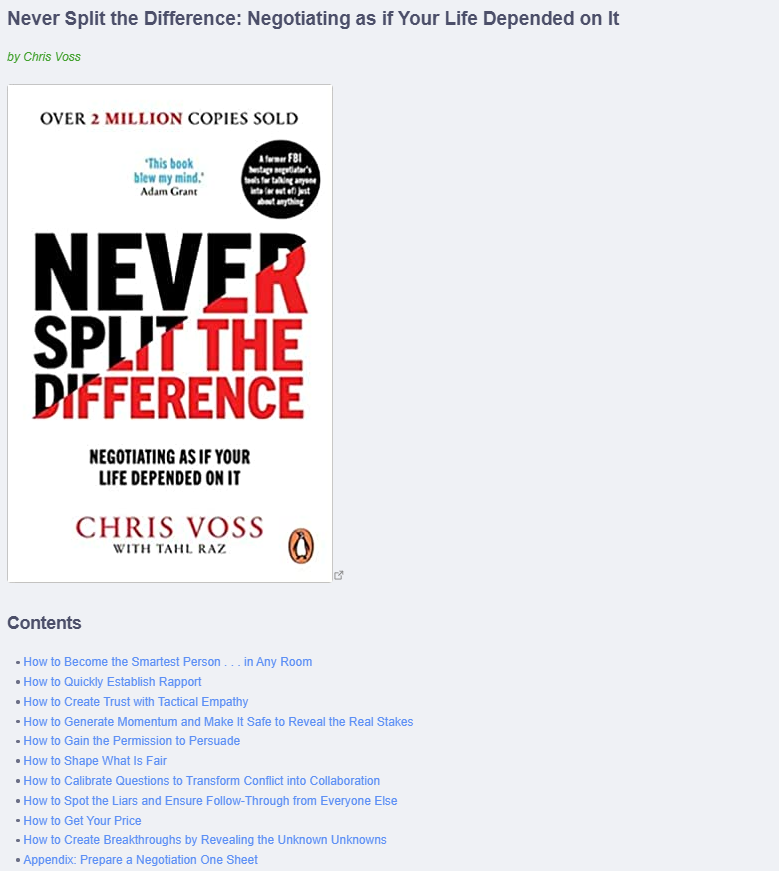
    Never Split The Difference

    – Chris Voss –

    ⭐⭐⭐⭐

    The Shadow Of The Gods

    – John Gwynne –

    ⭐⭐⭐⭐

    Ultralearning

    – Scott H. Young –

    ⭐⭐⭐

    Norse Mythology

    – Neil Gaiman –

    ⭐⭐⭐

    The Ghost Brigades

    – John Scalzi –

    ⭐⭐⭐

    The Emperor’s Handbook

    – Marcus Aurelius –

    ⭐⭐⭐

    How To Take Smart Notes

    – Sonke Ahrens –

    ⭐⭐⭐