

Welcome to Robert’s Radar; a semi-regular snapshot of what’s bouncing around in my head lately. Ideas, questions, , and quotes that stuck with me. Essays, art, music, tech, and books that are too interesting to leave buried in my notes.
No theme, no fluff. Just the things worth pausing for.
If you’re curious, thoughtful, or just mentally scrolling… this one’s for you.
Here are five things I’ve been reading, watching, and thinking about.
Engineering | The Satisfying Logic of the Clink
Mechanical Pencil is an illustrated site that takes everyday objects apart and explains the engineering inside them. This edition covers the Zippo lighter, a design that has remained unchanged since the 1930s. The breakdown centres on its bi-stable mechanism: a hinge geometry that holds the lid stable in two positions, open and closed, and nowhere in between. The same principle applies to your light switch and your earbud case. Twenty-odd parts. Two stable states. One memorable sound.
The deeper point: great engineering is often invisible until someone shows you where to look.

https://mechanical-pencil.com/products/zippo
Essay | The Fertility Lottery, Now With AI

IVF turned 48 years old. Louise Joy Brown was born on 25 July 1978 in Oldham, England, the first human conceived outside the body. Critics at the time warned of slippery slopes and dystopian futures. Now AI is entering fertility clinics, selecting embryos, predicting implantation odds, optimising protocols, and the same arguments are back, sharper and more personal.
This Longreads essay by Phineas Rueckert asks the question underneath all of it: when AI improves the odds of a particular embryo becoming a child, are parents making a better medical decision, or are they making a choice that was never theirs to make? Worth reading slowly, especially if you’ve ever had a reason to think about what existence is made of.
https://longreads.com/2026/03/03/ivf-and-ai-infertility/
Art | The Making of the Perfect Martini – Guy Buffet (2000)
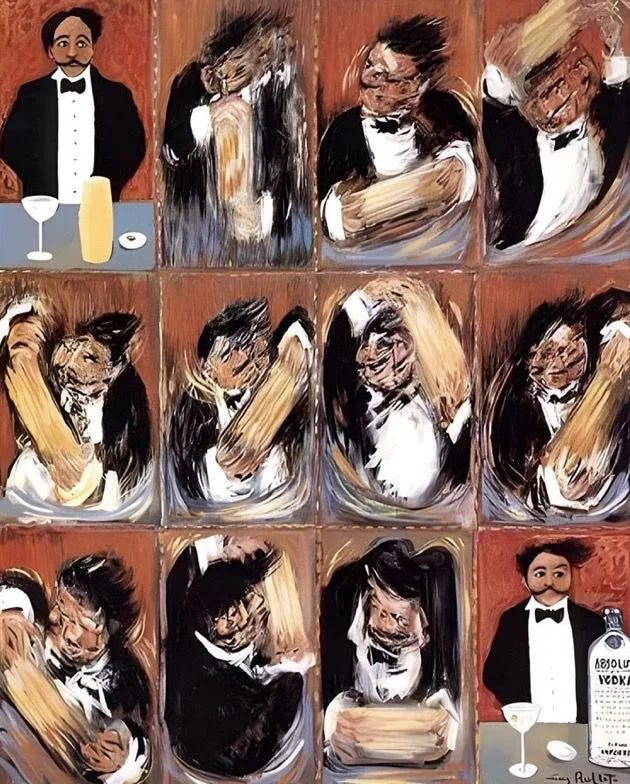
In 2000, Absolut Vodka commissioned Guy Buffet to produce a painting for its international art series. Buffet, a French artist who had spent his Paris adolescence at the cinema and making flip-book animations, borrowed the format. The finished work divides a single canvas into twelve panels and follows a bartender through the making of a martini from bottle to glass.
The choice in the format matters. The ritual of making something well, the sequence of small deliberate gestures, needs duration to register. A single, static frame would not have had the same effect.
The martini also carries a cultural argument embedded in its method. Traditional cocktail practice holds that spirit-only drinks should be stirred, not shaken, to avoid over-diluting the flavour. Bond disagrees, famously and on the record, and so does the bartender in Buffet’s painting.
“Shaken, not Stirred” – James Bond
The logic holds up: shaking causes more ice to melt and adds the water dilution a larger drink needs to sit right. It also incorporates fine air bubbles, emulsifying the ingredients and pulling them together into a single drink rather than leaving them separate.
The classic recipe, if you want to try it for yourself:
- 60 ml gin or vodka
- 30 ml dry vermouth
- 2 dashes orange bitters
Shake over ice until cold. Strain into a chilled glass. Bond would approve.
Book | A Thousand Splendid Suns – Khaled Hosseini
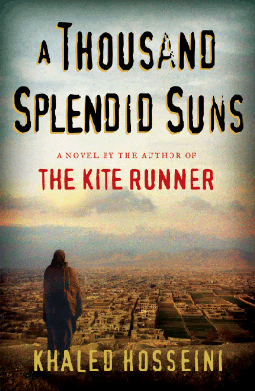
I finished this recently, and it stayed with me.
Hosseini’s second novel follows two Afghan women across three decades of war, occupation, and survival. He writes about endurance without sentimentalising it. The two women begin as adversaries, however what grows between them over years of shared suffering is harder to name than friendship.
Audio | Children of Time – Adrian Tchaikovsky
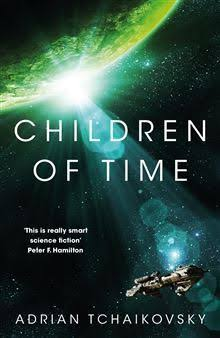
Simultaneously, I finished listening to this on audio, whilst commuting.
A failed terraforming mission leaves a nanovirus, designed to accelerate primate evolution, accidentally uplifting spiders instead. Tchaikovsky then builds an entire civilisation from that premise including science, theology, war and philosophy. He does so through the perspective of a species that experiences the world through distributed senses and collective memory rather than individual consciousness.
The question I kept returning to: if an intelligence can arrive at the same conclusions through a completely different structure, is it the same consciousness?
For anyone interested in cognition, this is philosophy dressed as entertainment
Robert’s Radar is published when there’s something worth reading. If you found this edition useful, the previous seven are at robertcamilleri.com.



Leave a Reply